
this article was originally published to my discontinued newsletter, HYPERPHANTASIA, on 22 August 2025. i will be reposting some old articles for the next several weeks while i am away at a meditation retreat. enjoy!
“i want to inhale the stars and choke on the dust of all the lives they held.”
it’s a quote painted on one of the rafter beams of the awarehouse—the communal event space at everland, where i moved four months ago. it’s funny, in a dark sort of way—considering that the other night, i had the most severe asthma attack i’ve had since i was 19. i clung to the teachings of my naturopathic upbringing—drink nettles, pour eucalyptus oil into some hot water and inhale the steam, don’t lie down, don’t fall asleep—for as many hours as i could before i finally cracked and asked my friend to drive me to the emergency room.
i was taught to be strong, that i could handle anything, that i did not need the pharmaceutical or medical industries.
sometimes it’s wiser to be weak.
i have desperately wanted to take my health into my own hands for several years. unfortunately, i’m broke as a joke, and i am quite particular about how i want to be cared for. i want the plants and animals to save me, but sometimes all that helps is to be hooked up to a machine that pumps you full of steroidal bronchodilators, giggling like it’s your first time standing in the coke line of the women’s bathroom—internally, of course, so you don’t seem uncool.
i’ll admit that a lot of my chronic health issues have to do with thinking that developing anorexia nervosa was some kind of a power move. i knew that spending the first half of my life malnourished on purpose would atrophy my bones, obliterate my gut, dry out my skin, cause cognitive issues, blah blah, duh. i had the internet. i didn’t care, because destroying my body felt strangely empowering. i was taught to be strong, that i could handle anything, that my body did not need what it thought it needed, did not know what it thought it knew.
the sick body is much wiser than we care to admit.
one of my best friends drove me to the ER yesterday. this same friend has mentioned the word “chronic pain” to me every time we’ve seen each other, ever since i asked him a few weeks ago if he suffers from it.
apparently, no one had ever thought to ask him this. despite his morning aches and brain fog and blatantly obvious connective tissue problems, no one has thought to ask him this. and of course, he’s never thought to advocate for himself. because in today’s america, if a man in the labour force is honest about his chronic pain, he’s “making excuses.”
making excuses.
support this work by becoming a paid subscriber OR make a one-time donation via the following links. thank you, friend!
VENMO // SPOTFUND // CASHAPP // STRIPE
before i moved to asheville, my mother confessed that over the course of my life, she’d been advised by several sources to have me evaluated for autism. but she resisted. “i didn’t want you to use it as an excuse for why you couldn’t succeed in life.” ableism is insidious, isn’t it? it’ll have a mother convinced that her disabled child will be less disabled if their disability is ignored.
autistic people are more at risk for autoimmune conditions, connective tissue disorders, specific kinds of anxiety that cannot be treated generally, and eating disorders. the neurodiversity paradigm tends to focus on advocating for autistic strengths—a necessary enantiodromic response to age-old misunderstandings and stigmas surrounding autism. but the condition is still disabling, even if just due to the lack of autism-inclusive social infrastructure. i will grieve for the rest of my life that i was not diagnosed until adulthood. my mother grieves right along with me; she didn’t know better.
what’s the difference between an excuse and an explanation? between a label and a limiting belief? between weakness and wisdom, between strength and folly?
what is so fucking scary about being ill?
i have a friend from the northeast who has hEDS. it affects every part of her bone structure, especially her spine and pelvis. when she first received this diagnosis, she lost a lot of friends. it wasn’t until the social isolation and lack of financial opportunity caused her to move away that an old friend finally reached back out, finally confessed as to why he and the others walked away when she most needed them.
“it wasn’t because of something you did,” he told her. “it was because we knew that what’s happening to you would eventually happen to all of us. we weren’t ready to face the inevitability of our own deaths.”
we weren’t ready to face the inevitability of our own deaths.
ableism is death anxiety.
i chatted with my friend today about the difference between earth-based cultures that revere the dead and respect death, and so-called “civilizations” that obsess over immortality and having longer lifespans. ironically, civilisations (who tend to take pride in increased individual lifespans) have relatively short lifespans (>300 years) compared to the more tribalistic cultures that are humanity’s origins (we spent hundreds of thousands of years as hunter-gatherers. hundreds of thousands).
if you cling to your life, you will lose it, and if you let your life go, you will save it.
it reads like a taoist proverb, but it’s from the gospel of luke. ancient wisdom is like that—it speaks as many languages as it needs to. sometimes it speaks the language of weakness, of illness, of death. of that which we’d rather not see.
i want to inhale the stars and choke on the dust of all the lives they held.
it’s a statement in reverence of death. i can’t read it otherwise, not after 24 hours without enough breath.
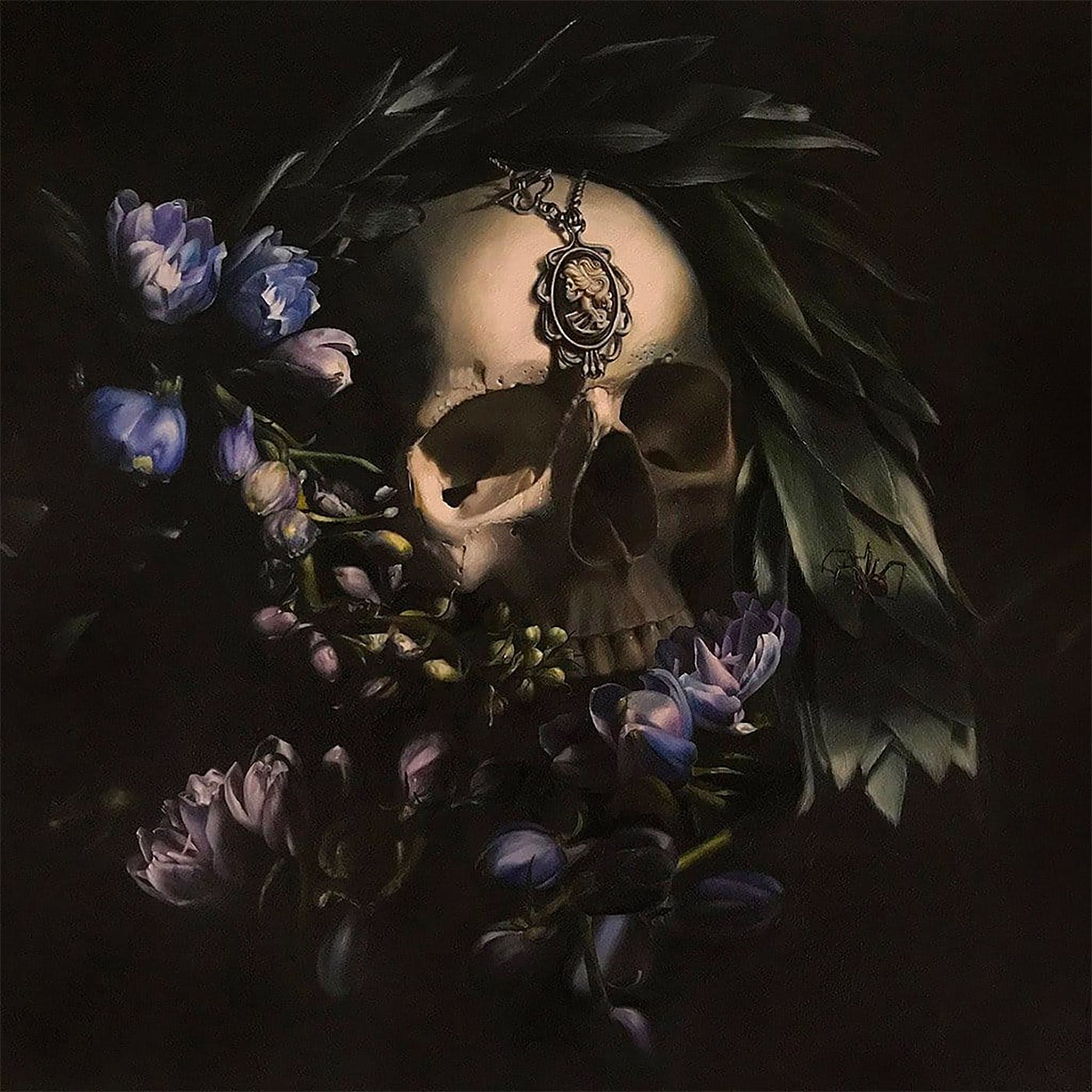
memento mori.
happy underworlding.
become a ritual design wizard with the web of wyrdcraft.
join the monthly ritual art playspace for creative intuitives here.
get a copy of my poetry zine.
appreciated hearing this a lot, thank you as always for your unique and precious insight